
Comparing 0 vendors in Mainframe Modernization across 0 criteria.
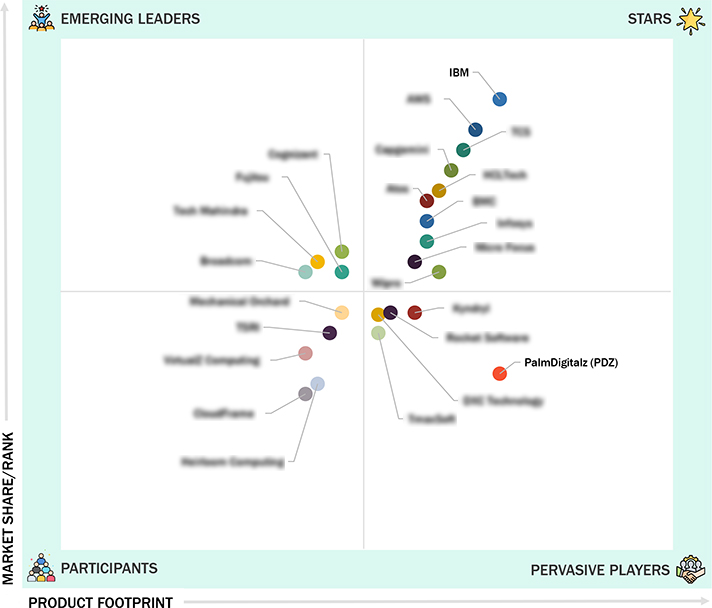
The Mainframe Modernization market is steadily expanding as enterprises strive to balance the reliability of legacy systems with the agility of modern technologies. Current developments emphasize a shift toward hybrid cloud adoption, AI-driven automation, and API enablement, allowing organizations to modernize selectively while maintaining mission-critical workloads. Industries such as BFSI, government, and telecom are leading adoption due to compliance and scalability needs, while challenges like high costs, legacy integration complexities, and declining COBOL expertise continue to slow progress. Overall, modernization is evolving from one-off migrations to continuous, software-led programs, positioning it as a strategic necessity for enterprises navigating digital transformation.
1.1 Study Objectives
1.2 Market Definition
1.3 Study Scope
1.3.1 Market Segmentation and Regional Scope
1.3.2 Inclusions & Exclusions
1.3.3 Years Considered
1.4 Currency Considered
1.5 Units Considered
1.6 Stakeholders
1.7 Summary of Changes
2.1 Introduction
2.2 Market Dynamics
2.2.1 Drivers
2.2.1.1 Need for agility, speed, and digital transformation
2.2.1.2 Cost reduction and operational efficiency
2.2.1.3 Integration with modern technologies (cloud, AI, DevOps)
2.2.2 Restraints
2.2.2.1 High complexity of legacy applications
2.2.2.2 Risk of business disruption during transformation
2.2.2.3 Shortage of modernization expertise
2.2.3 Opportunities
2.2.3.1 Accelerated innovation with cloud-native and AI tools
2.2.3.2 Migration to pay-as-you-go and managed modernization
services
2.2.3.3 Enhanced business agility through modular architectures
2.2.3.4 Modernization demand in highly regulated sectors
2.2.4 Challenges
2.2.4.1 Understanding legacy system architecture and code complexity
2.2.4.2 Ensuring data integrity and compliance during migration
2.2.4.3 Long modernization timelines and resource management
2.2.4.4 Integrating mainframe and non-mainframe workloads smoothly
2.3 Evolution of Mainframe Modernization Software and Services
2.4 Mainframe Modernization Market: Ecosystem Market Map
2.5 Supply Chain Analysis
2.6 Technology Analysis
2.6.1 Key Technologies
2.6.1.1 Automated Code Conversion and Refactoring
2.6.1.2 Cloud Hosting and Mainframe-as-a-Service
2.6.2 Adjacent Technologies
2.6.2.1 Hybrid cloud orchestration platforms
2.6.2.2 Low-code and no-code application platforms
2.6.3 Complementary Technologies
2.6.3.1 AI (including Gen AI for Code Transformation)
2.6.3.2 Data Migration and Integration Tools
2.7 Patent Analysis
2.8 Porter’s Five Forces Analysis
2.8.1 Threat of New Entrants
2.8.2 Threat of Substitutes
2.8.3 Bargaining Power of Suppliers
2.8.4 Bargaining Power of Buyers
2.8.5 Intensity of Competitive Rivalry
2.9 Trends/Disruptions Impacting Customer Business
2.10 Key Conferences and Events
2.11 Technology Roadmap for Mainframe Modernization Market
2.11.1 Short-Term Roadmap (2023–2025)
2.11.2 Mid-Term Roadmap (2026–2028)
2.11.3 Long-Term Roadmap (2029–2030)
2.12 Best Practices in Mainframe Modernization Market
2.12.1 Comprehensive Assessment and Business Alignment
2.12.2 Incremental and Modular Modernization
2.12.3 Automated Code Transformation and Testing
2.12.4 Cross-Functional Teams and Knowledge Transfer
2.12.5 Security and Compliance Integration
2.13 Investment and Funding Scenario
2.14 Impact of Gen AI on Mainframe Modernization Market
2.14.1 Top Use Cases and Market Potential
2.14.1.1 Key Use cases
2.15 Impact of 2025 US Tariffs—Overview
2.15.1 Introduction
2.15.2 Key Tariff Rates
2.15.3 Price Impact Analysis
2.15.4 Impact on Region/Country
2.15.4.1 North America
2.15.4.2 Europe
2.15.4.3 Asia Pacific
2.15.5 Impact on End-Use Industries
3.1 Overview
3.2 Key Player Strategies/Right to Win, 2023–2025
3.3 Market Share Analysis, 2024
3.3.1 Market Ranking Analysis
3.4 Revenue Analysis, 2020–2024
3.5 Brand/Product Comparison
3.6 Company Valuation and Financial Metrics
3.7 Company Evaluation Matrix: Key Players, 2024
3.7.1 Stars
3.7.2 Emerging Leaders
3.7.3 Pervasive Players
3.7.4 Participants
3.7.5 Company Footprint: Key Players, 2024
3.7.5.1 Company footprint
3.7.5.2 Region footprint
3.7.5.3 Offering footprint
3.7.5.4 Organization size footprint
3.7.5.5 Vertical footprint
3.8 Competitive Scenario
3.8.1 Product Launches
3.8.2 Deals
4.1 IBM
4.1.1 Business overview
4.1.2 Products/Solutions/Services offered
4.1.3 Recent developments
4.2 AWS
4.2.1 Business overview
4.2.2 Products/Solutions/Services offered
4.2.3 Recent developments
4.3 TCS
4.3.1 Business overview
4.3.2 Products/Solutions/Services offered
4.3.3 Recent developments
4.4 CAPGEMINI
4.4.1 Business overview
4.4.2 Products/Solutions/Services offered
4.4.3 Recent developments
4.5 HCLTECH
4.5.1 Business overview
4.5.2 Products/Solutions/Services offered
4.5.3 Recent developments
4.6 ATOS
4.6.1 Business overview
4.6.2 Products/Solutions/Services offered
4.6.3 Recent developments
4.7 MICRO FOCUS (OPENTEXT)
4.7.1 Business overview
4.7.2 Products/Solutions/Services offered
4.7.3 Recent developments
4.8 BMC SOFTWARE
4.8.1 Business overview
4.8.2 Products/Solutions/Services offered
4.8.3 Recent developments
4.9 INFOSYS
4.9.1 Business overview
4.9.2 Products/Solutions/Services offered
4.9.3 Recent developments
4.10 WIPRO
4.10.1 Business overview
4.10.2 Products/Solutions/Services offered
4.10.3 Recent developments
4.11 DXC TECHNOLOGY
4.11.1 Business overview
4.11.2 Products/Solutions/Services offered
4.11.3 Recent developments
4.12 KYNDRYL
4.12.1 Business overview
4.12.2 Products/Solutions/Services offered
4.12.3 Recent developments
4.13 ROCKET SOFTWARE
4.13.1 Business overview
4.13.2 Products/Solutions/Services offered
4.13.3 Recent developments
4.14 PALMDIGITALZ
4.14.1 Business overview
4.14.2 Products/Solutions/Services offered
4.14.3 Recent developments
4.15 TMAXSOFT
4.15.1 Business overview
4.15.2 Products/Solutions/Services offered
4.15.3 Recent developments
4.16 FUJITSU
4.16.1 Business overview
4.16.2 Products/Solutions/Services offered
4.16.3 Recent developments
4.17 COGNIZANT
4.17.1 Business overview
4.17.2 Products/Solutions/Services offered
4.17.3 Recent developments
4.18 TECH MAHINDRA
4.18.1 Business overview
4.18.2 Products/Solutions/Services offered
4.18.3 Recent developments
4.19 BROADCOM
4.19.1 Business overview
4.19.2 Products/Solutions/Services offered
4.19.3 Recent developments
4.20 TSRI
4.20.1 Business overview
4.20.2 Products/Solutions/Services offered
4.20.3 Recent developments
4.21 MECHANICAL ORCHARD
4.21.1 Business overview
4.21.2 Products/Solutions/Services offered
4.21.3 Recent developments
4.22 VIRTUALZ COMPUTING
4.22.1 Business overview
4.22.2 Products/Solutions/Services offered
4.22.3 Recent developments
4.23 CLOUDFRAME
4.23.1 Business overview
4.23.2 Products/Solutions/Services offered
4.23.3 Recent developments
4.24 HEIRLOOM COMPUTING
4.24.1 Business overview
4.24.2 Products/Solutions/Services offered
4.24.3 Recent developments


Company Profiles
Strategy, financials, growth, and SWOT
Market Insights
Visual quadrant of competitors and leaders
Benchmarking
Compare by product, region, and end-user
Lead Gen Add-on
Use the quadrant to attract clients

360 Quadrants is a scientific research methodology by MarketsandMarkets to understand market leaders in 6000+ micro markets
360 Quadrants is a scientific research methodology by MarketsandMarkets to understand market leaders in 6000+ micro markets
Email : [email protected]
Quick Links
360 Quadrants is a scientific research methodology by MarketsandMarkets to understand market leaders in 6000+ micro markets
 Company
 Headquarters
 Year Founded
 Holding Type