
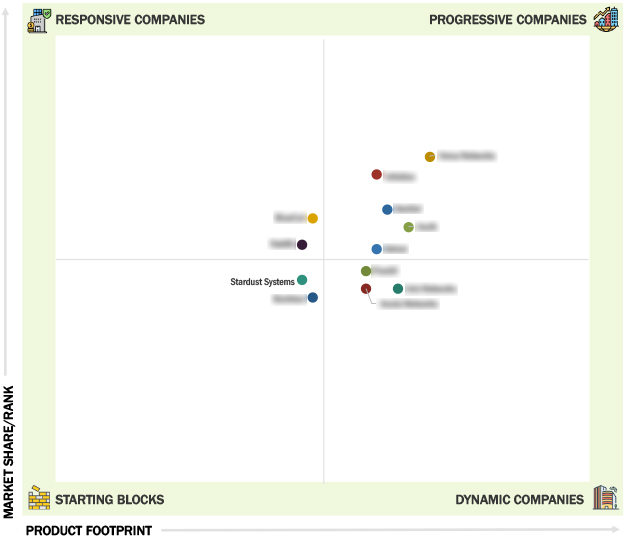
Comparing 12 vendors in Network Automation Startups across 0 criteria.
The global network automation market is experiencing significant growth as enterprises and service providers seek to manage increasingly complex IT and communication infrastructures. The adoption of hybrid and multi-cloud environments, 5G, IoT, edge computing, and cloud-native technologies is making traditional manual network management less efficient. Network automation solutions, including orchestration, configuration management, monitoring, and analytics, help organizations streamline operations, reduce human errors, improve network reliability, and accelerate service provisioning. Cloud-based deployment is gaining traction due to its scalability, flexibility, and cost efficiency, while on-premises solutions remain relevant for organizations with stringent security and compliance requirements.
1.1 Study Objectives
1.2 Market Definition
1.2.1 Inclusions and Exclusions
1.3 Market Scope
1.4 Years Considered
1.5 Currency Considered
1.6 Stakeholders
1.7 Summary of Changes
2.1 Introduction
2.2 Market Dynamics
2.2.1 Drivers
2.2.1.1 Rising Network Complexity & Scale
2.2.1.2 Need for Operational Efficiency & Cost Reduction
2.2.1.3 Security & Compliance Requirements
2.2.2 Restraints
2.2.2.1 High Initial Investment & Integration Challenges
2.2.2.2 Lack of Skilled Workforce
2.2.3 Opportunities
2.2.3.1 Integration of AI and Ml in Network Automation to Drive Autonomous Networks
2.2.3.2 5G & Edge Computing Expansion
2.2.3.3 Cloud-native & Multi-vendor Interoperability
2.2.4 Challenges
2.2.4.1 Security Risks of Automated Networks
2.2.4.2 Vendor Lock-in & Interoperability Issues
2.3 Industry Trends
2.3.1 History of Network Automation Market
2.3.1.1 1990–2000
2.3.1.2 2000–2010
2.3.1.3 2010–2020
2.3.1.4 2021–Present
2.4 Trends/Disruptions Impacting Customer Business
2.5 Supply Chain Analysis
2.2.1 Technology & Infrastructure Providers
2.2.2 Software & Platform Providers
2.2.3 Integration & Service Providers
2.2.4 End Users
2.6 Ecosystem Analysis
2.7 Technology Analysis
2.7.1 Key Technologies
2.7.1.1 Software-defined Networking (SDN)
2.7.1.2 Network Function Virtualization (NFV)
2.7.1.3 Intent-based Networking (IBN)
2.7.1.4 Machine Learning (Ml) & Artificial Intelligence (AI)
2.7.2 Adjacent Technologies
2.7.2.1 Cloud Computing
2.7.2.2 5G
2.7.2.3 Network Monitoring & Observability
2.7.3 Complementary Technologies
2.7.3.1 Digital Twin
2.7.3.2 Robotic Process Automation (RPA)
2.8 Porter’s Five Forces Model Analysis
2.8.1 Threat of New Entrants
2.8.2 Threat of Substitutes
2.8.3 Bargaining Power of Suppliers
2.8.4 Bargaining Power of Buyers
2.8.5 Intensity of Competitive Rivalry
2.9 Key Conferences & Events, 2025–2026
2.10 Technology Roadmap for Network Automation Market
2.10.1 Short-term Roadmap (2025–2026)
2.10.2 Mid-term Roadmap (2027–2028)
2.10.3 Long-term Roadmap (2029–2030)
2.11 Best Practices in Network Automation Market
2.12 Current and Emerging Business Models2.18 Tools, Frameworks, and Techniques Used in Network Automation
2.13 Introduction to Artificial Intelligence and Generative AI
2.13.1 Impact of Generative AI on Network Automation Market
2.13.2 Use Cases of Generative AI in Network Automation Market
2.14 Investment and Funding Scenario
2.15 Impact of 2025 US Tariff – Network Automation Market
2.15.1 Introduction
2.15.2 Key Tariff Rates
2.16 Price Impact Analysis
2.16.1 Impact on Country/Region
2.16.1.1 US
2.16.1.2 Europe
2.16.1.3 Asia Pacific
2.16.2 Impact on Network Automation End Users
3.1 Introduction
3.2 Key Player Strategies/Right to Win, 2021–2025
3.2.1 Overview of Strategies Adopted By Key Network Automation Players
3.3 Revenue Analysis, 2020–2024
3.4 Market Share Analysis, 2024
3.5 Company Evaluation Matrix: Startups/SMEs, 2024
3.5.1 Progressive Companies
3.5.2 Responsive Companies
3.5.3 Dynamic Companies
3.5.4 Starting Blocks
3.5.5 Competitive Benchmarking: Startups/SMEs, 2024
3.5.5.1 Detailed List of Key Startups/SMEss
3.5.5.2 Competitive Benchmarking of Key Startups/SMEs
3.6 Brand/Product Comparison
3.7 Company Valuation and Financial Metrics
3.8 Competitive Scenario
3.8.1 Product Launches
3.8.2 Deals
4.1 STARDUST SYSTEMS, INC.
4.1.1 Business overview
4.1.2 Products/Solutions/Services offered
4.1.3 Recent developments
4.2 VERSA NETWORKS
4.2.1 Business overview
4.2.2 Products/Solutions/Services offered
4.2.3 Recent developments
4.3 INFOBLOX
4.3.1 Business overview
4.3.2 Products/Solutions/Services offered
4.3.3 Recent developments
4.4 ITENTIAL
4.4.1 Business overview
4.4.2 Products/Solutions/Services offered
4.4.3 Recent developments
4.5 AUVIK NETWORKS
4.5.1 Business overview
4.5.2 Products/Solutions/Services offered
4.5.3 Recent developments
4.6 ARRCUS
4.6.1 Business overview
4.6.2 Products/Solutions/Services offered
4.6.3 Recent developments
4.7 BLUECAT
4.7.1 Business overview
4.7.2 Products/Solutions/Services offered
4.7.3 Recent developments
4.8 KENTIK
4.8.1 Business overview
4.8.2 Products/Solutions/Services offered
4.8.3 Recent developments
4.9 Flock9
4.9.1 Business overview
4.9.2 Products/Solutions/Services offered
4.9.3 Recent developments
4.10 AVIZ NETWORKS
4.10.1 Business overview
4.10.2 Products/Solutions/Services offered
4.10.3 Recent developments
4.11 ANUTA NETWORKS
4.11.1 Business overview
4.11.2 Products/Solutions/Services offered
4.11.3 Recent developments
4.12 BACKBOX
4.12.1 Business overview
4.12.2 Products/Solutions/Services offered
4.12.3 Recent developments


Company Profiles
Strategy, financials, growth, and SWOT
Market Insights
Visual quadrant of competitors and leaders
Benchmarking
Compare by product, region, and end-user
Lead Gen Add-on
Use the quadrant to attract clients
 YourStory.com
 Aug 2026
IT Brief Asia
Mar 2026
DataCenterNews Asia Pacific
Feb 2026
Futuriom
Feb 2026
Times of India
Dec 2025
Aug 2026
IT Brief Asia
Mar 2026
DataCenterNews Asia Pacific
Feb 2026
Futuriom
Feb 2026
Times of India
Dec 2025

360 Quadrants is a scientific research methodology by MarketsandMarkets to understand market leaders in 6000+ micro markets
360 Quadrants is a scientific research methodology by MarketsandMarkets to understand market leaders in 6000+ micro markets
Email : [email protected]
Quick Links
360 Quadrants is a scientific research methodology by MarketsandMarkets to understand market leaders in 6000+ micro markets
 Company
 Headquarters
 Year Founded
 Holding Type